Engagement Rings
Why Is a 1-Carat Diamond the Most Popular Size?
The 1-carat threshold is a marketing construct that became a cultural benchmark. Understanding why it exists, and what it actually costs, makes the decision clearer.
The one-carat diamond is the most requested size in engagement rings, by a margin that has nothing to do with the stone’s visual qualities at that specific weight. A 1.00-carat round brilliant and a 0.95-carat round brilliant are visually indistinguishable on the hand. The price difference between them can be 15 to 25 percent. This gap exists because the market has decided that crossing the round number matters, even when the round number produces no visible change.
Knowing this is useful. It does not mean the 1-carat diamond is the wrong choice, but it means the decision should be made on the right grounds.
Why the Number
Has Power
Diamond pricing operates on what the industry calls “magic sizes”: 0.50, 0.75, 1.00, 1.50, 2.00 carats. At each threshold, the price per carat jumps because demand concentrates there. A 1.00-carat stone commands a per-carat premium over a 0.99-carat stone because buyers request 1 carat minimum at a far higher rate than any adjacent weight.
This concentration of demand at magic sizes is a genuine market phenomenon. People have been told that 1 carat is the standard for decades, and collective belief creates collective pricing. If you want a 1.00-carat diamond specifically because you want to own one, that is a valid reason. If you are indifferent to the round number and care only about what the ring looks like, the logic points elsewhere.

Cut Quality
and Apparent Size
The single biggest factor in how large a diamond appears on the hand is not its weight. It is the quality of the cut.
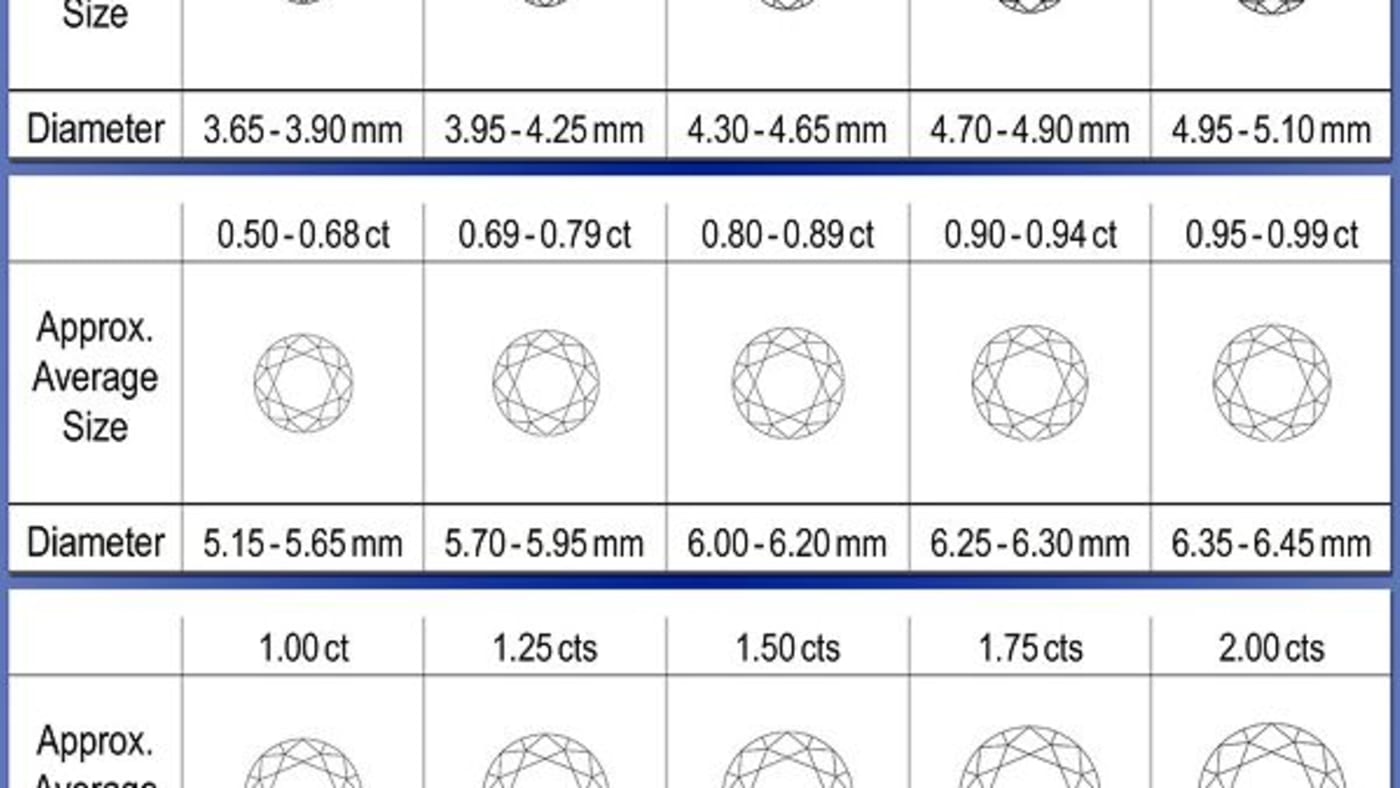
A well-cut 0.90-carat round brilliant with ideal or excellent proportions will have a face-up diameter of approximately 6.2 to 6.3 millimeters. A poorly cut 1.10-carat round brilliant with steep pavilion angles that retain weight in the depth rather than spreading it across the table may face up at 6.1 millimeters. The heavier stone looks smaller because the cutter prioritized weight retention over performance.
This means a smaller, well-cut diamond can face up larger than a heavier, poorly cut one. The certificate weight tells you how much the stone weighs. The face-up diameter, combined with the cut grade, tells you how large it looks on the hand. These are different things.
When comparing diamonds at a similar price point, a better-cut stone at 0.90 carats will typically outperform a poorer-cut stone at 1.05 carats both visually and in terms of light performance.
The Case For
Going Slightly Under
For buyers who are indifferent to the round-number milestone, a 0.90 to 0.95-carat diamond in an excellent or ideal cut offers a specific advantage: the savings from avoiding the magic-size premium can be redirected to cut quality, color, or clarity.
A 0.92-carat stone with excellent cut in G color and VS1 clarity will typically outperform a 1.00-carat stone in the same budget with mediocre cut, I color, and SI1 clarity. The smaller stone will be brighter, will face up nearly as large, and will have better long-term visual performance in varied lighting conditions.
The opposite argument: if you genuinely want to own a 1-carat diamond, and that matters to you, then buy a 1-carat diamond. The premium is real, but so is the satisfaction of having what you wanted.
When Larger
Actually Matters
At some point, carat weight does matter visually. The difference between a 0.50-carat and a 1.00-carat round brilliant is noticeable on the hand. The difference between a 1.00-carat and a 1.50-carat is also noticeable. These are genuine jumps in presence.
The question is whether the cost of those jumps is proportionate to the visual return. Because diamond pricing increases exponentially with size, the cost of adding visual presence through carat weight grows faster than the visual benefit. Adding a Blaze® halo, or improving cut quality, often produces more visible change per dollar than buying a heavier stone at the same budget.
What People
Ask Us
Does a 1-carat diamond look significantly bigger than a 0.90-carat? Not significantly. The face-up diameter difference between a 1.00-carat and a 0.90-carat round brilliant, assuming similar cut quality, is approximately 0.2 millimeters. That is not a perceptible difference in person. The price difference, however, can be 15 to 25 percent. This is the magic-size effect in action.
What matters more: carat weight or cut quality? Cut quality, for most buyers. A well-cut diamond at 0.90 carats will face up larger, return more light, and perform better across lighting conditions than a poorly cut diamond at 1.10 carats. Certificate weight is not the same as visual presence. Cut quality is the factor most often underweighted by buyers focused on the round number.
Is buying slightly under 1 carat a good strategy? For buyers without a strong preference for the round-number milestone, yes. A 0.92 to 0.97-carat stone in excellent cut avoids the magic-size premium while being visually indistinguishable from a 1.00-carat of equivalent cut quality. The savings can be applied to better color, clarity, or setting.
Why do diamond prices jump at 1 carat? Because demand concentrates at magic sizes. Buyers specify 1-carat minimum at a rate far higher than adjacent weights, which concentrates demand and allows sellers to charge a per-carat premium at that threshold. It is a market phenomenon, not a reflection of any physical change in the stone at exactly 1.00 carats.
How much does a 1-carat diamond cost? Price varies significantly by cut, color, and clarity. A 1.00-carat round brilliant in G/VS2 with an excellent GIA cut grade typically ranges from $7,000 to $10,000 depending on specific proportions and current market conditions. A comparable 0.92-carat might be $5,800 to $8,000. Prices shift; current inventory pricing is the most reliable reference.
Continue Reading
- Alexandrite Engagement Rings: The Color-Change Stone
- Aquamarine Engagement Rings: When Blue Is the Right Choice
- Art Deco Engagement Rings: Geometry, Contrast, and Permanence
Explore the Bez Ambar engagement ring collection.
Ready to start your own piece? Contact the studio for a private consultation.
Commission a Piece of Your Own
Every piece is designed and made in the Los Angeles atelier, from the first reading of the stone to the final pass of the setting wheel. Enquire to begin a commission.


