Colored Stones
Alexandrite: The Gemstone That Changes Color Under Different Light

The most dramatic optical phenomenon in the gem world — and also the most frequently misrepresented — lives in a single variety of chrysoberyl.
The Physics of Color Change
Why Alexandrite Does What It Does
Alexandrite is a variety of chrysoberyl that contains trace amounts of chromium — the same element responsible for the red in ruby and the green in emerald. What makes alexandrite unique is that chromium’s absorption of light is precisely calibrated to a point where human vision interprets the transmitted light as green under daylight-balanced light sources and as red-purple under incandescent sources. The stone does not change. The light changes. The stone’s chromium chemistry simply reads the light differently depending on its spectral composition.
The phenomenon was first documented in Russia’s Ural Mountains in the early nineteenth century, with accounts of its discovery tied to the Tsarist era. Russian alexandrite remains the historic benchmark — strongly green in daylight, strongly red under candle or incandescent light, with a change that is clean and complete rather than muddied. That material is now essentially exhausted at the commercial level. Brazilian, Sri Lankan, and East African sources dominate current production, with synthetic and laboratory-grown material filling the lower price tiers.
Grading the Color Change
Strong vs. Weak and What the Difference Costs
Not all alexandrites change color equally. A stone might shift from a grayish-green to a grayish-purple — a change that exists but is not dramatic. A top-quality stone shifts from a vivid, saturated green to a vivid, saturated red or purplish-red with little residual gray or brown. The trade describes this as a “strong” or “complete” color change, and the price differential between a weak-change stone and a strong-change stone of similar size can be enormous.
Evaluation requires seeing the stone under both light types. A fluorescent office environment gives you the daylight side. An incandescent lamp or candle gives you the red side. The question to ask is whether both colors are genuinely attractive — some stones show attractive green but weak, brownish red. The most valued stones look beautiful in both environments. Weight also matters: fine alexandrite above one carat with a strong color change is extraordinarily rare in natural material, and prices per carat increase sharply at the one-carat threshold.
Natural vs. Laboratory-Grown
The Supply Problem and Its Solution
The natural supply of fine alexandrite is genuinely constrained. Most alexandrite sold at the lower price points — under a few hundred dollars per carat — is either laboratory-grown corundum with a color-change characteristic, synthetic alexandrite produced by the flux or hydrothermal method, or chrysoberyl with a weak, unattractive change. None of these are misrepresentations if disclosed, but the disclosure does not always happen.
Laboratory-grown alexandrite is optically and chemically identical to natural alexandrite. The color-change mechanism is the same. For buyers who want the visual experience at a fraction of the cost, it is a legitimate choice. For buyers who want a natural stone with rarity value, laboratory-grown is a different product. The price difference between a well-documented natural alexandrite with strong color change and a synthetic of comparable visual quality is not small — it can be 10 to 30 times. Know what you are buying.
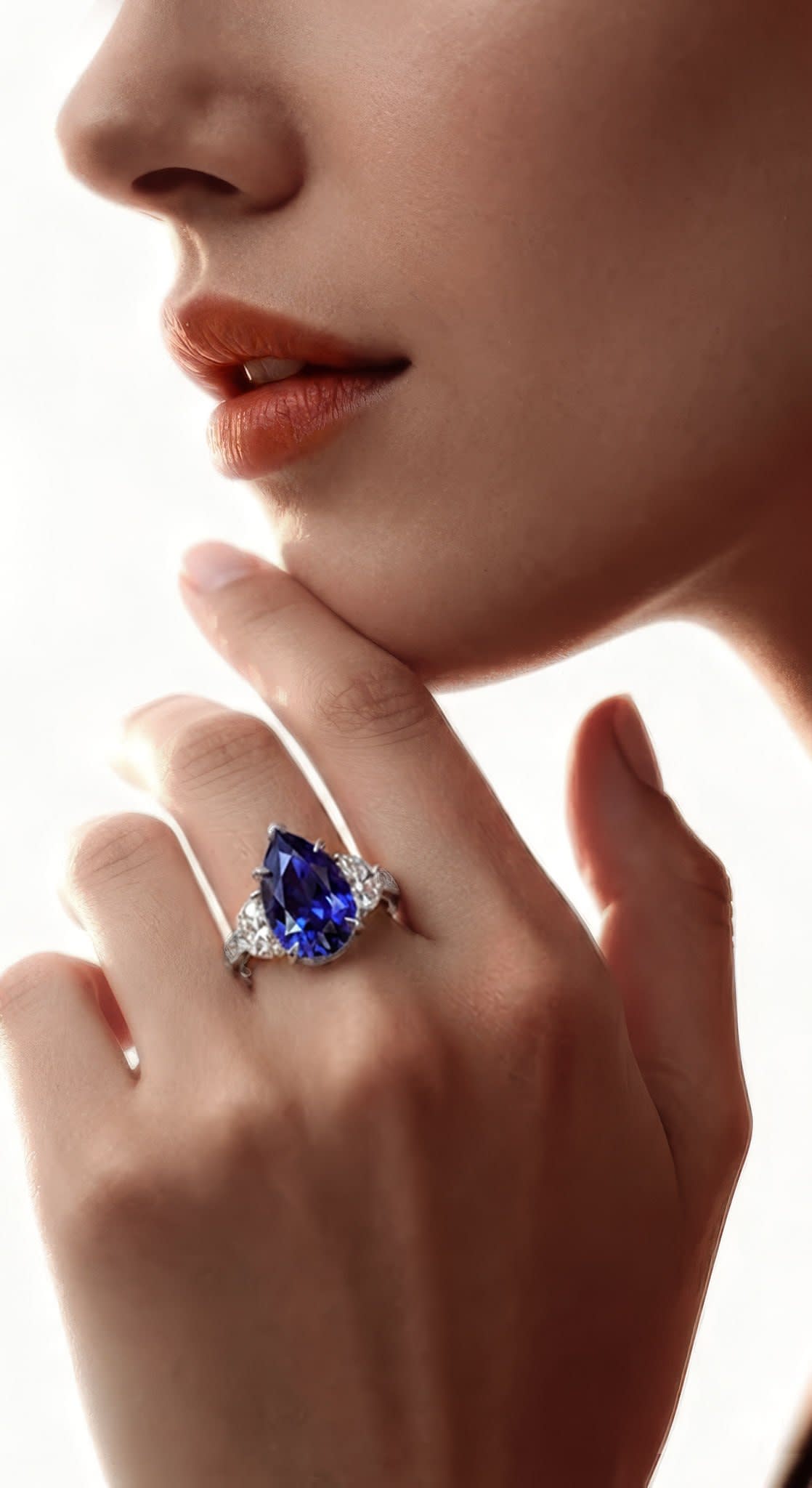
Brazilian, Sri Lankan, and East African Sources
Current Production and What to Expect
Brazilian alexandrite from the Hematita district in Minas Gerais has been the primary commercial source since Russian material declined. Brazilian stones tend toward a more yellowish-green in daylight and purplish-red under incandescent light — the change can be strong, but the daylight color is often less pure green than Russian material. Sri Lankan alexandrite shows a color change that can be very attractive, with stones that have good transparency and saturation. East African material from Tanzania and Zimbabwe has entered the market and occasionally produces stones with excellent color change.
For any significant purchase, a laboratory report from GIA or an equivalent laboratory is not optional. The report will identify the stone as natural or synthetic, characterize the origin if possible, and describe the color change. Without it, you are relying entirely on the seller’s word.
What People
Ask Us
How do I evaluate the color change without gemological equipment? You need two light sources: a daylight or cool-white LED environment and an incandescent lamp. Hold the stone under each and assess both the quality of each color (saturation, purity, absence of gray or brown) and the completeness of the change. A great stone looks vibrantly attractive in both environments. A weak stone looks grayish in one or both.
What is the price range for natural alexandrite? Quality natural alexandrite with a well-documented strong color change ranges from approximately $3,000 to $15,000 per carat at the commercial level, rising sharply for stones above one carat with top color change. Exceptional Russian material above one carat with museum-quality color change trades at multiples above that. Stones with weak color change can be purchased for much less, but the visual experience is proportionally diminished.
Is alexandrite suitable for daily wear? Yes — chrysoberyl has a hardness of 8.5 on the Mohs scale, making it one of the more durable gem species. It is harder than tanzanite, spinel, or tourmaline and is a reasonable choice for rings that will be worn regularly, provided the setting protects the stone adequately.
What is the difference between alexandrite and color-change sapphire? Both show a color shift under different light sources, but the mechanism and the resulting colors differ. Color-change sapphire typically shifts from blue to purple or violet, and the change is usually less dramatic than fine alexandrite. Alexandrite’s green-to-red shift is unique in the gem world. The two stones are not in the same species and should not be confused.
Does the country of origin affect value for alexandrite? Significantly. Russian origin commands the highest premium by far, followed by Brazilian material with strong color change. Sri Lankan origin is well-regarded. The origin premium is most meaningful for collectors purchasing investment-grade material above one carat. For jewelry buyers seeking a beautiful stone, a well-documented Brazilian or Sri Lankan stone with strong color change often represents better value than paying a Russian-origin premium for slightly superior daylight color.
Continue Reading
- Amethyst Jewelry: The Purple Stone That Has Always Had Presence
- Aquamarine Jewelry: The March Birthstone Worth Knowing Well
- Blue Diamond Ring vs Blue Sapphire Ring
Explore the Bez Ambar colored stone collection.
Ready to start your own piece? Contact the studio for a private consultation.
Commission a Piece of Your Own
Every piece is designed and made in the Los Angeles atelier, from the first reading of the stone to the final pass of the setting wheel. Enquire to begin a commission.


