Colored Stones
Lab Created Sapphire vs Natural Sapphire: A Direct Comparison

A laboratory sapphire is not an imitation — it is the same mineral, grown in a controlled environment rather than a geological one, and the comparison deserves a direct, honest treatment.
What Makes Them the Same
Corundum Is Corundum
Natural sapphire and laboratory-grown sapphire are both corundum — aluminum oxide — colored by trace elements. The chemical composition, crystal structure, hardness (9 on the Mohs scale), refractive index, and optical properties are identical. A gemologist examining a laboratory sapphire and a natural sapphire of the same color side by side cannot distinguish them with the naked eye, a loupe, or a refractometer. Both are real sapphires by any mineralogical definition.
The production methods for laboratory corundum — flame fusion (Verneuil process), hydrothermal growth, and flux growth — each produce slightly different growth characteristics that trained gemologists can identify under magnification. Flame fusion stones (the oldest and most common method) show curved growth striae and gas bubbles under magnification. Hydrothermal and flux-grown material more closely mimics natural growth patterns and requires more sophisticated testing to identify. A skilled gemologist with proper equipment can make the determination, and the major gem laboratories do so routinely.
What Makes Them Different
Rarity, Documentation, and Resale
The meaningful differences between natural and laboratory sapphire are not chemical or optical — they are economic and philosophical. Natural sapphire formed over geological timescales under specific temperature, pressure, and chemical conditions that are unrepeatable and geographically constrained. Fine natural sapphires with origin documentation — Kashmir, Burma, Ceylon — are genuinely rare, and that rarity supports a collector market, auction records, and long-term value retention that laboratory material does not have.
A natural Kashmir sapphire of one carat with GIA documentation may sell for $10,000 to $50,000 per carat. A laboratory sapphire of comparable visual quality may sell for $50 to $200 per carat. Both stones will look similar in a ring. The difference is not in what you see today but in what the stone represents and what it will be worth in twenty years. If rarity and investment potential matter to you, natural is the only path. If you want the visual result at dramatically lower cost, laboratory is a legitimate and honest choice.
The Disclosure Requirement
What Sellers Are Obligated to Tell You
Any reputable seller — and the FTC regulations in the United States — require clear disclosure when a sapphire is laboratory-grown. The stone must be described as “laboratory-created,” “synthetic,” or “lab-grown” — not simply as “sapphire,” which implies natural origin. A buyer who purchases what they believe is a natural sapphire and later discovers it is laboratory-grown has grounds for a fraud claim.
The practical risk for buyers is purchasing from sources that do not disclose clearly — estate sales, online marketplaces, international vendors operating outside robust regulatory frameworks. A GIA or AGL report on any significant sapphire will state whether the stone is natural or synthetic without ambiguity. That report is the buyer’s protection, and the cost of obtaining one is trivial relative to the price of any significant stone.
Making the Right Choice for Your Situation
Which Version of the Stone Serves Your Goals
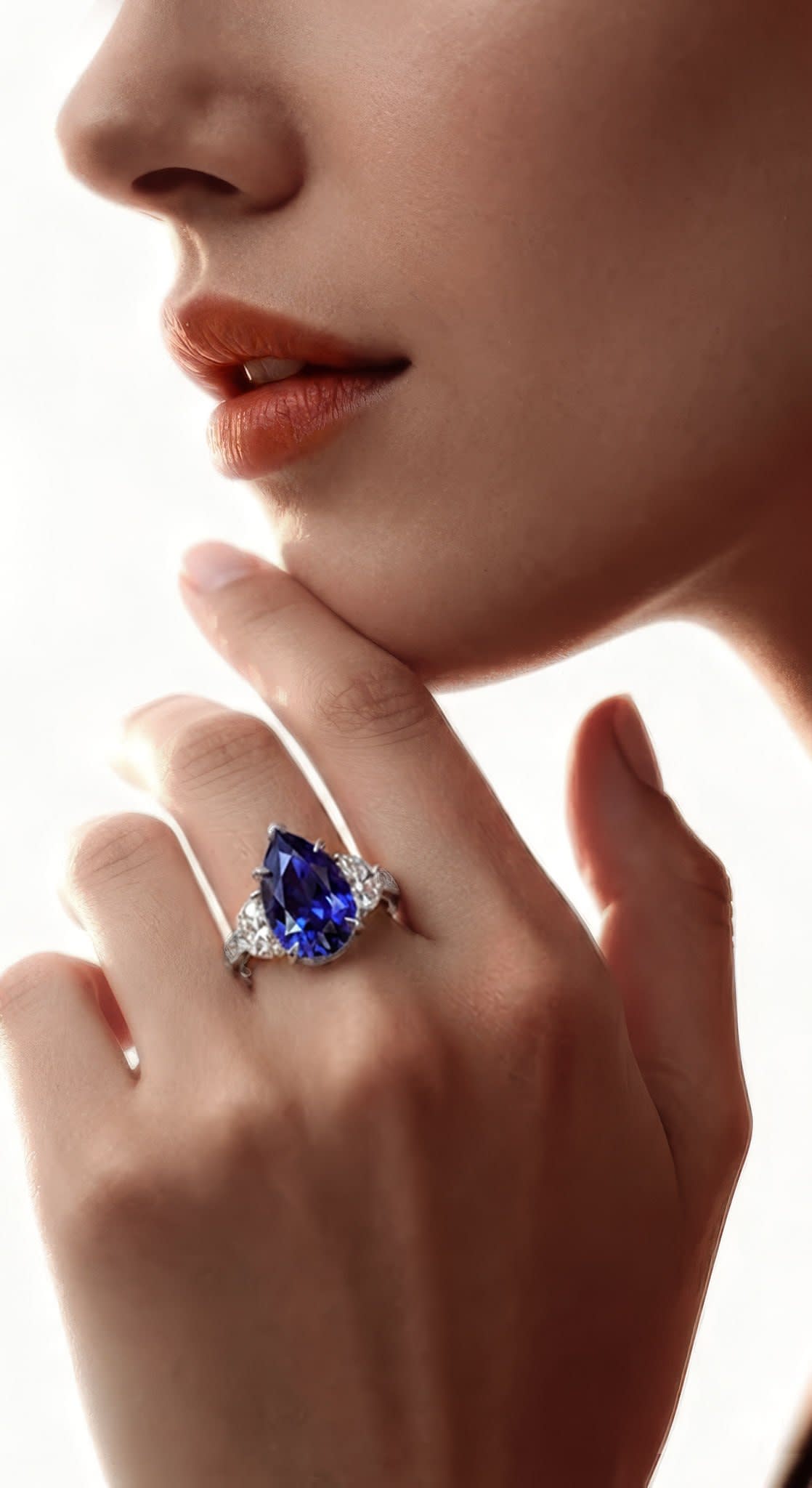
The choice between natural and laboratory sapphire is not a quality question — it is a values question. A buyer who wants to maximize visual impact per dollar, who cares about wearing a beautiful blue stone rather than owning a rare natural object, and who is not thinking about resale value is well-served by a fine laboratory sapphire in a well-made setting. The stone will look extraordinary, perform identically, and cost a fraction of the natural equivalent.
A buyer who wants a natural stone with documented origin — who values rarity, provenance, and the knowledge that the stone formed under specific geological conditions over millions of years — should buy natural with full documentation. That buyer should also understand the price difference and make peace with it. Both choices are legitimate when made with full information.
What People
Ask Us
Can a jeweler tell if my sapphire is lab-grown without testing? Not with the naked eye or a simple loupe inspection in most cases. Distinguishing laboratory from natural sapphire reliably requires gemological testing — microscopic examination for growth features, spectroscopic analysis, or fluorescence testing. A GIA or AGL report is the authoritative answer.
Does a lab sapphire hold its value over time? No, not in the way natural sapphire does. Laboratory corundum production costs have declined steadily, which means the price floor for the stones continues to fall. Natural sapphires with documentation have demonstrated value retention and appreciation over decades, supported by a collector market and auction infrastructure that laboratory stones do not have.
Is there a quality difference in the blue color? No. Fine laboratory sapphire can be produced in the same range of blue as natural material, from pale cornflower blue to deep royal blue. The color you see is the color you get. If anything, laboratory production allows more precise color control than nature, and it is possible to produce consistently fine blue stones without the origin variable.
Are there ethical reasons to prefer lab-grown sapphire? Some buyers cite mining concerns — environmental impact, labor practices in certain producing regions — as reasons to prefer laboratory material. This is a legitimate consideration. Fine natural sapphires with responsible-sourcing documentation exist, and the supply of well-documented ethical natural material has grown, but the laboratory option eliminates the mining footprint entirely.
What should I ask a seller before purchasing a sapphire? Ask directly whether the stone is natural or laboratory-grown, and ask to see the laboratory report. Any seller who hesitates, deflects, or does not have a report for a significant stone is a seller to walk away from. The report answers the natural vs. synthetic question definitively and also addresses treatment, origin (for natural stones), and quality factors.
Continue Reading
- Morganite: The Pink Beryl That Has Earned a Permanent Place in Fine Jewelry
- Opal Engagement Rings: Beauty, Risk, and Long-Term Realities
- Buying a Ruby: Color, Origin, Treatment, and Price
Explore the Bez Ambar colored stone collection.
Ready to start your own piece? Contact the studio for a private consultation.
Commission a Piece of Your Own
Every piece is designed and made in the Los Angeles atelier, from the first reading of the stone to the final pass of the setting wheel. Enquire to begin a commission.


