Colored Stones
Morganite: The Pink Beryl That Has Earned a Permanent Place in Fine Jewelry
Morganite is beryl — the same mineral family as emerald and aquamarine — and it inherits all of the clarity advantages that make beryl one of the most satisfying stone categories to buy.
What Morganite Is and Where It Comes From
The Pink-Peach Beryl and Its Sources
Morganite is colored by manganese, which gives it a range running from very pale blush to deeper, more saturated pink-orange, with the most desirable material landing in a strong peachy-pink that is warm without reading as overtly orange. Major sources include Brazil, Madagascar, Afghanistan, and the United States, with Madagascar and Brazil accounting for most of the commercial production that feeds the fine jewelry market.
The stone was named after financier and gem collector J.P. Morgan in 1911 by the gemologist George Frederick Kunz, which places it in the company of kunzite — another pink gem named by the same person in the same era. Unlike kunzite, morganite has proved to be a genuinely durable jewelry stone, and its popularity since approximately 2012 reflects a broader market shift toward warm-toned pink and peach stones set in rose gold. That combination — morganite with rose gold — became one of the defining aesthetic signatures of the mid-2010s jewelry market and continues to sell consistently.
Color Quality and the Saturation Ladder
Light Pink vs. Deep Peachy-Pink and What You Are Paying For
The color variable in morganite is saturation. Pale morganite — which is the majority of commercial production — has a soft, delicate blush tone that is pleasant but lacks visual presence. The minority of production that shows deeper, more saturated peachy-pink commands a premium and justifies it: that material has genuine color weight and reads from across the room in a way the pale stones cannot.
The saturation ceiling in morganite is lower than in ruby or sapphire — the stone simply does not achieve the same depth of color. The best morganite reads as a strong, warm pink-peach with consistent color across the face of the stone. The worst commercial material barely registers as colored. Heat treatment is used to reduce any orange or yellow component and produce a purer pink, and it is universal and stable. There is no disclosure stigma attached to it in morganite as there might be in other stone categories.
Why Clarity Is a Reasonable Expectation
Setting Your Bar Appropriately for Beryl
As with aquamarine, morganite grows under conditions that favor good clarity, and finding an eye-clean or loupe-clean stone is achievable at most size ranges. The inclusions that do occur in morganite are typically fine needles or growth planes rather than the fracture networks that characterize emerald. An included morganite at a significant price is simply a stone that was not selected carefully — there is enough clean material on the market that buyers should not accept significant inclusions.
Clarity matters more in larger stones and step-cut shapes, where the viewer’s eye travels through the interior of the stone. In brilliant cuts, minor inclusions are largely obscured by the faceting. In an emerald-cut or oval morganite above five carats, clarity is visible and should be clean.
Size, Setting, and the Rose Gold Question
Making Morganite Work in the Jewelry Context
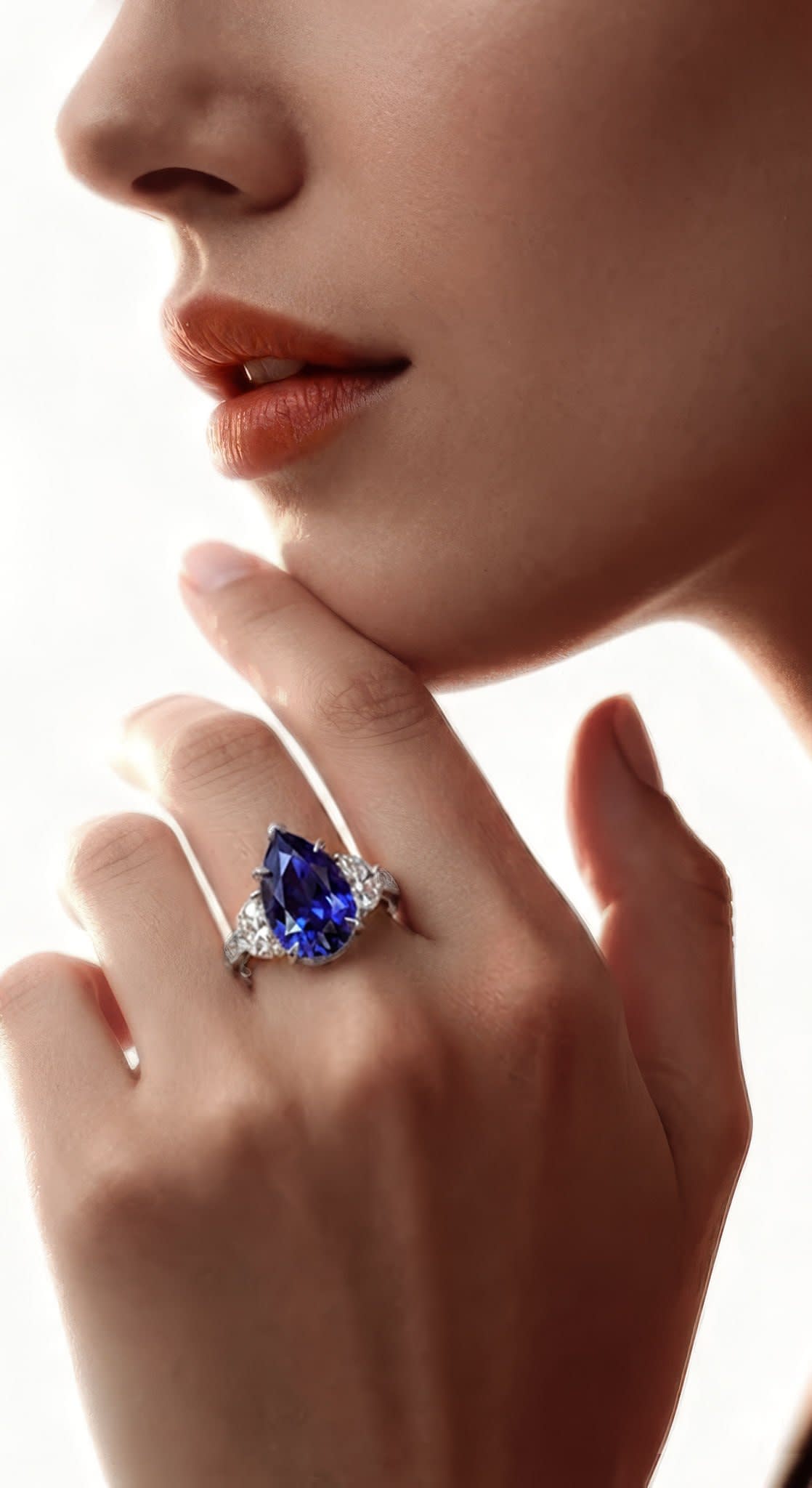
Morganite responds well to larger sizes, as the saturation improves noticeably with mass. A two-carat stone will show better color than a one-carat stone of equal quality. Many clients who want morganite engagement rings are surprised by how much better the five-to-eight carat range looks compared to what they assumed would be their ceiling. Part of the appeal is price: morganite at five carats is accessible in a way that ruby or sapphire at the same size is not.
Rose gold became the default setting for morganite for good reasons — the warm, pink undertone of rose gold deepens the perceived saturation of the stone and creates a cohesive warmth across the piece. White gold and platinum create higher contrast and make the stone’s color read cooler. Yellow gold can work beautifully with the peach-orange component in some stones. All are legitimate choices; the rose gold pairing is not a rule, just a starting point that works reliably.
What People
Ask Us
Is morganite a durable choice for an engagement ring? Beryl has a hardness of 7.5 to 8, which is durable enough for regular wear with appropriate care. It will not scratch easily from everyday contact. The main risks are impact (which could chip the stone at a vulnerable edge or inclusion) and careless cleaning. For a client who is realistic about maintenance, morganite in a protective setting is a workable engagement ring choice.
Why has morganite become so popular for engagement rings? The rose-gold morganite combination offered an alternative aesthetic to the traditional white-diamond solitaire at a significantly lower price point. The stone also photographs well, which matters more than it used to given how jewelry is shared and discovered online. Its popularity reflects real appeal, not manufactured trends.
How does morganite compare to pink sapphire in value? Pink sapphire with comparable saturation is worth substantially more per carat than morganite. For buyers who want a pink center stone, morganite offers more size per dollar, while pink sapphire offers more color depth and durability per carat. The trade-off is real and the right answer depends on what the buyer prioritizes.
What is a fair price for morganite? Commercial pale morganite is extremely affordable — under $50 per carat at the retail level in smaller sizes. Deeply saturated, well-cut peachy-pink material in the three-to-ten carat range can reach $200 to $600 per carat, with exceptional material higher. The price accessibility is genuine and is one of the stone’s genuine selling points.
Can morganite be used in an ultrasonic cleaner? Yes, generally. Morganite without surface-reaching fractures or significant inclusions that might propagate is safe in ultrasonic cleaners. If the stone has any visible fractures or has been treated with any filler, avoid ultrasonic cleaning. Warm soap and water with a soft brush is always the safest maintenance approach for any gemstone.
Continue Reading
- Opal Engagement Rings: Beauty, Risk, and Long-Term Realities
- Buying a Ruby: Color, Origin, Treatment, and Price
- Sapphire Engagement Rings: Yes or No?
Explore the Bez Ambar colored stone collection.
Ready to start your own piece? Contact the studio for a private consultation.
Commission a Piece of Your Own
Every piece is designed and made in the Los Angeles atelier, from the first reading of the stone to the final pass of the setting wheel. Enquire to begin a commission.


